
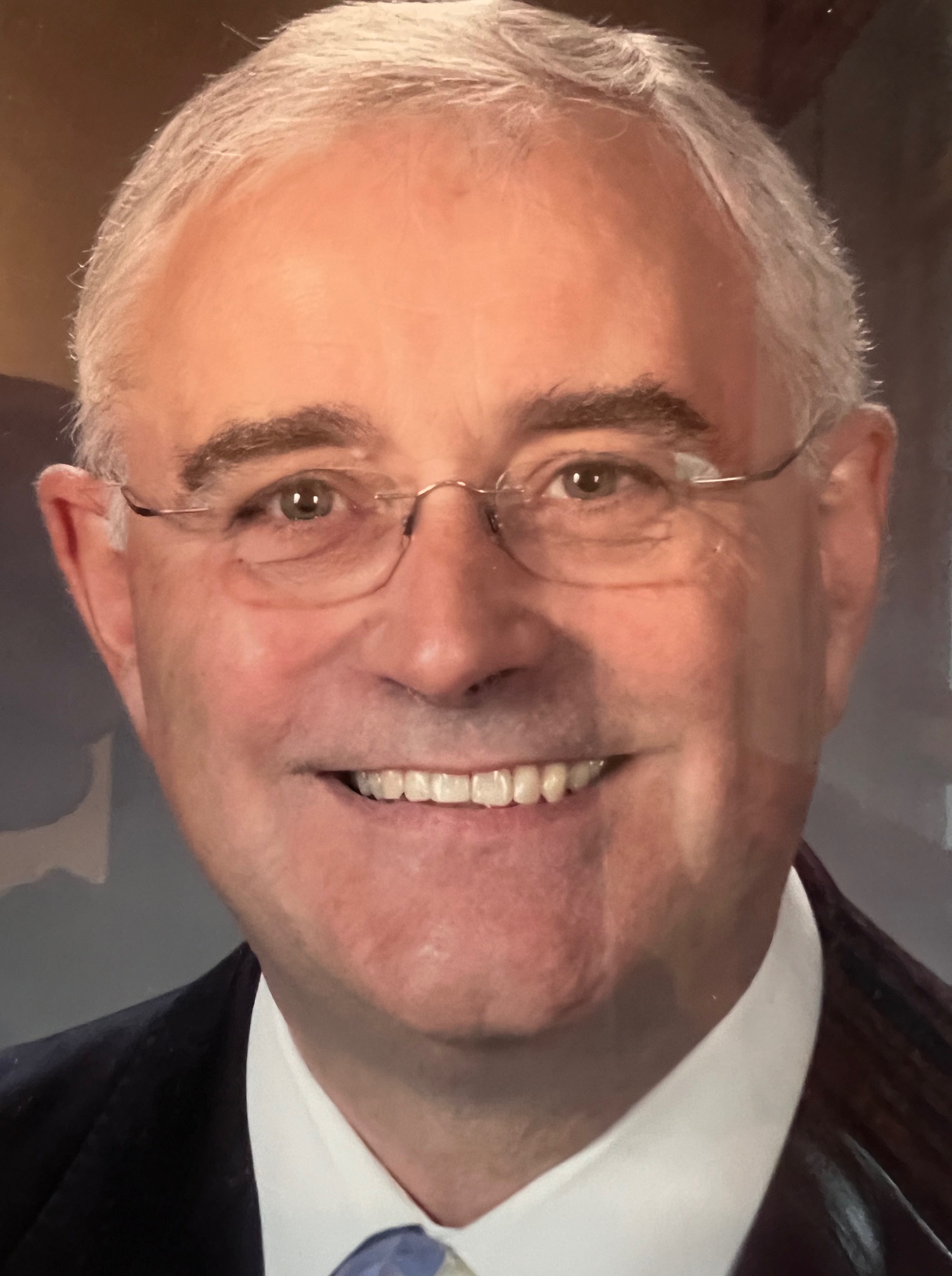
“In addition to advising the Board, I led the national investigation on E Coli epidemic in children visiting animal petting farms.”
– Professor George Griffin, CBE, Phd, DSc, FRCP, FmedSci, the Emeritus Professor of Infectious Diseases and Medicine at City St George’s University of London.
It has been a long and celebrated career for George Griffin. His contributions to the field of public health medicine and research have seen him receive a CBE, as well as taking on positions such as Vice-President of Academy of Medical Sciences and then going to the European Academy of Medical Sciences. In this interview, George shares with us how Hull helped shape him, and how he has influenced medical practice not just in the UK but also abroad.
How did you come to study at the University of Hull?
The University of Hull provided me with a great opportunity to study for a PhD in the Department of Zoology. After gaining my 2ndMB and BSc in Medicine and Pharmacology at King’s College, London, I decided to come back to my home city of Hull. I had been stimulated academically at KCL by Professor Jean Hanson in Biophysics. I became fascinated by skeletal muscle cell biology and had a great opportunity to return to Hull to work with Professor Geoffrey Goldspink.
I had received leave of absence from my clinical studies at St George’s Hospital Medical School. I completed my PhD and then finished my three year clinical medicine at St George’s.
How did your experiences of the University of Hull shape your future career?
The Head of Department at Hull recommended my application for a Harkness Fellowship at Harvard Medical School and I had a very successful time there in the Department of Physiology, gaining further biomedical training. After returning to the UK I then restarted my postgraduate medical training which lasted a further nine years gaining my professional qualification FRCP knowing that I had always wanted to practice clinical medicine at a high level after a thorough training in Biomedical Science.
There is no doubt that my time in Hull was very important in my career development.
My postgraduate clinical career was greatly stimulated by appointments in major London hospitals and finally being invited back to St George’s Hospital Medical School as lecturer in medicine and eventually becoming Professor of Infectious Diseases and Medicine at that institution. It was there, under the clerical tutelage of Professor Lambert that I started my research career, studying the human response to infection at molecular, cell and whole body level. I gained a Wellcome Trust Senior Lecture Fellowship which enabled me to set up an extensive research team in these areas.
You have made such a great contribution to public health through your career, it is difficult to summarise the many ways in which you’ve made a difference. Could you tell us your career highlights?
As my work progressed I was elected a Fellow of the Academy of Medical Sciences and eventually became International Vice President. The informal connections, particularly with the USA and EU encouraged me to be considered as President of the Federation of European Academies of Medicine and I was elected for the year in 1988. During this time I lead two major evidence review reports on the challenge of the ageing population and cancer screening. Both of these reports were extensively reviewed and have provided important reference for the best medical practice in the EU.
My medical interests and responsibilities in addition to continuing clinical practise then took another turn when I became a board member of the UK Government Health Protection Agency and I remained a member for ten years. I was able to use my biomedical and clinical training to a great extent in this position. In addition to advising the Board, I led the national investigation on E Coli epidemic in children visiting animal petting farms.
Public Health encompasses many clinical disciplines, not just infection and I turned my attention to vaccination as a protection. In conjunction with FEAM I published an important paper highlighting the important advances in vaccination for older people. In view of my contribution to public health and my research I was awarded a CBE in 2018.
As you look back on your career, what do you have to tell the next generation who might follow in your footsteps?
Looking back over my career I consider the most important aspect has been encouraging young clinicians and basic scientists the importance of research aimed at understanding human disease, particularly infection and defining new treatment stages. I believe my major achievement is stimulating and leading some twelve very excellent research fellows to become Professors of both clinical medicine and basic science in senior positions in the UK. They have all embraced the concept that basic biomedical science provides a backbone for clinical practice alongside of the human dimension of medicine as a caring profession.
 University of Hull Alumni Association
It came as no surprise to read that Professor Griffin has had such a distinguished career with many well deserved accolades.
I met him through a teaching colleague at Sir Leo Schultz High School on Orchard Park Estate in 1968.
He subsequently left Hull to become a registrar at St Geoerge’s Hospital in London.He and his wife moved to Wimbledon,I think.I recall visiting him there when he would transport us around the City in a Morris Minor van he converted to carry passengers on bench seats at the back.And he never washed it!
In the early 1970’s a group of six
(three couples)of us travelled through Europe including the then Czechoslovakia,Hungary and Bulgaria into Turkey and across the Bosphorus and down the coast to Ephesus where we camped out.We had many encounters and Professor Griffin always remained calm and rational and helped us out of some tricky encounters by taking the initiative and displaying his stethoscope on the dashboard.It also helped fast track him through the A&E Department of a hospital in Austria when he cut his head open when storing gear on the roof rack.
Unfortunately we lost touch when I moved to Wales following personal problems so was pleased to see not only has he fulfilled the potential he showed in those early days of his career but exceeded it with distinction to achieve outstanding prominence in his field.A remarkable man with considerable empathy,humility and most of all generosity in all its forms.He is an inspiration to us all.
P A (Bill) Bailey
BSc(Pure Maths/Physics)1967.
BPhil(Education)1975
LikeLike