
In this article we publish Malcolm Fox’s extensive memories of his time at the University of Hull in the 1970s. Born in Dormanstown in Redcar, which was Yorkshire at the time but is now part of Teesside, Malcolm originally went to LSE before coming to Hull as a mature student.
In this article there is a tragic explosion, lots of pranks, and a memorable police chase…
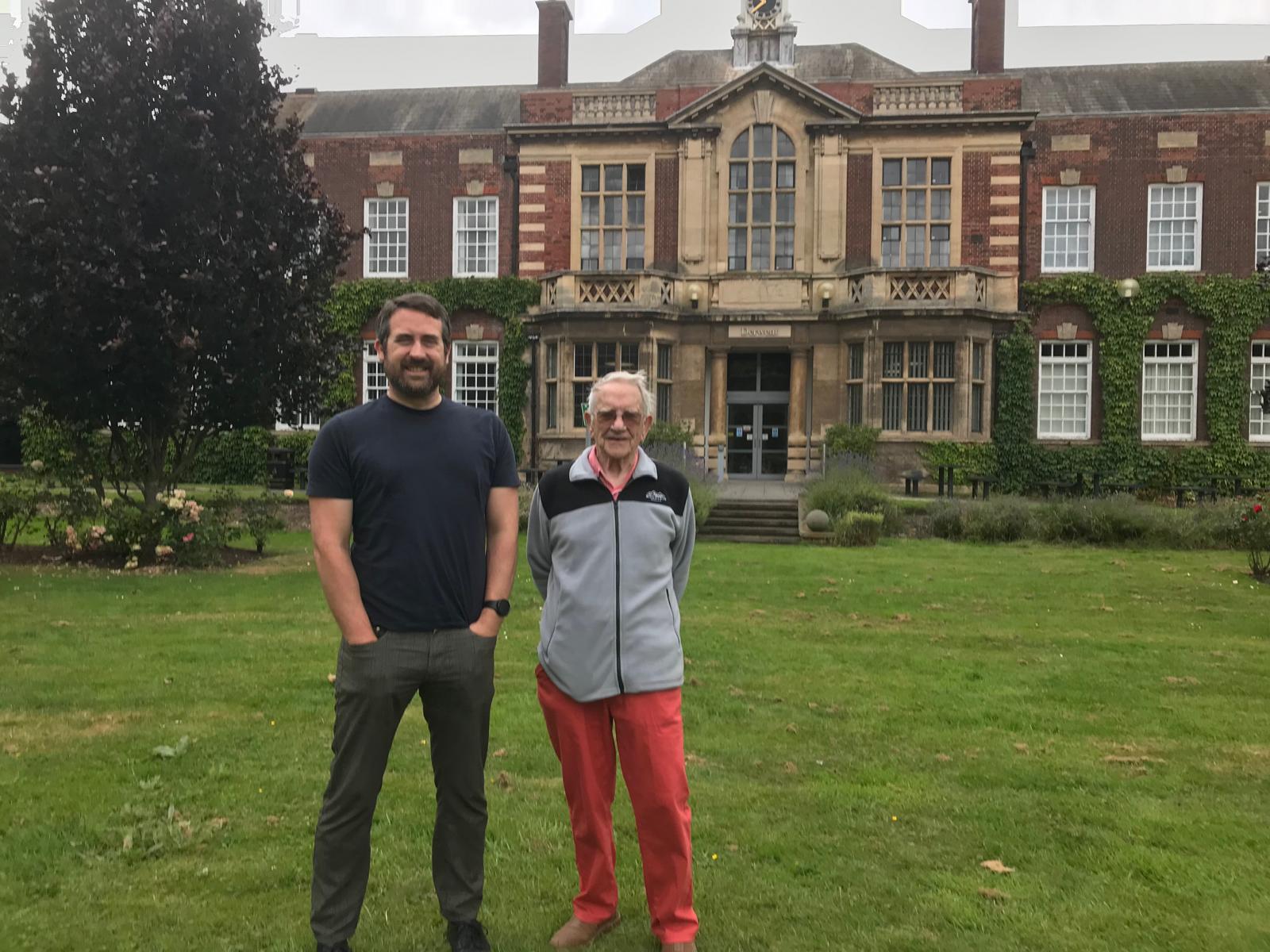
THE INTERVIEW AT HULL UNIVERSITY
As early as December 1972 I applied through the UCCA system to five universities to study Economics, from October 1973 through to July 1976. I was not interested in any of the joint degrees and I was only interested in obtaining an honours degree at the end of my study period. The universities were Reading, Manchester, Leeds, Durham, and Kingston upon Hull. I was lucky enough to get four conditional acceptances. The condition was that I would reach a successful conclusion to my studies at the LSE, which I achieved. The only one that did not accept me was Manchester.
After talking it over with my Professor at the LSE & also with Margaret, I decided to go to Hull if they would have me. The reason that I chose Hull was firstly the university took an average of 10% mature students in every intake which meant that I would not feel out of place with being one of the older students, and that my professor told me that of the universities that I had offers from, Hull had the highest throw out rate. This was ultimately borne out when I graduated. There were 220 students who commenced on the economics course in the first year and by the beginning of the second year there were only 90 students left. When it can to the graduation day there were only 30 students who achieved an honours degree and another 10 who achieved a pass degree, so you can see that I was very lucky to come away from Hull University with an honours degree. I therefore thought that if I could manage to get a degree from there then it would be worth more than from the others. It never occurred to me that I might be amongst the group that failed their course I always thought that I would work very hard and somehow get through with an honours degree.
I went to Hull for an interview and got accepted. It was rather strange but also I think, it showed how God was looking after me. I arrived at the department of economics for the interview & asked this middle-aged man where the office was, he told me that he was going in that direction and he would show me the way. Whilst we waited for the lift and during the time that we were in the lift he asked me various questions about myself and what I hoped to do at the university. We got into the lift together and when we got out he told me to go to the reception and he went in a different direction. Now then what was interesting is whilst we were walking together he got into conversation with me I thought that it was just general conversation, like why was I coming to Hull? What did I hope to study? What did my family feel about me going to university? But when I was called by the receptionist to go down the corridor and knock on room A62. I found that the man I had been talking to was the same man that was going to interview me & he just smiled and said “well Mr Fox I think that I have found out all that I need to know so I feel that I can recommend that you be accepted into the department to read for an honours degree in economics.”
October 1973 – July 1976 University of Kingston upon Hull. B.Sc. (Econ.) (Hons.)
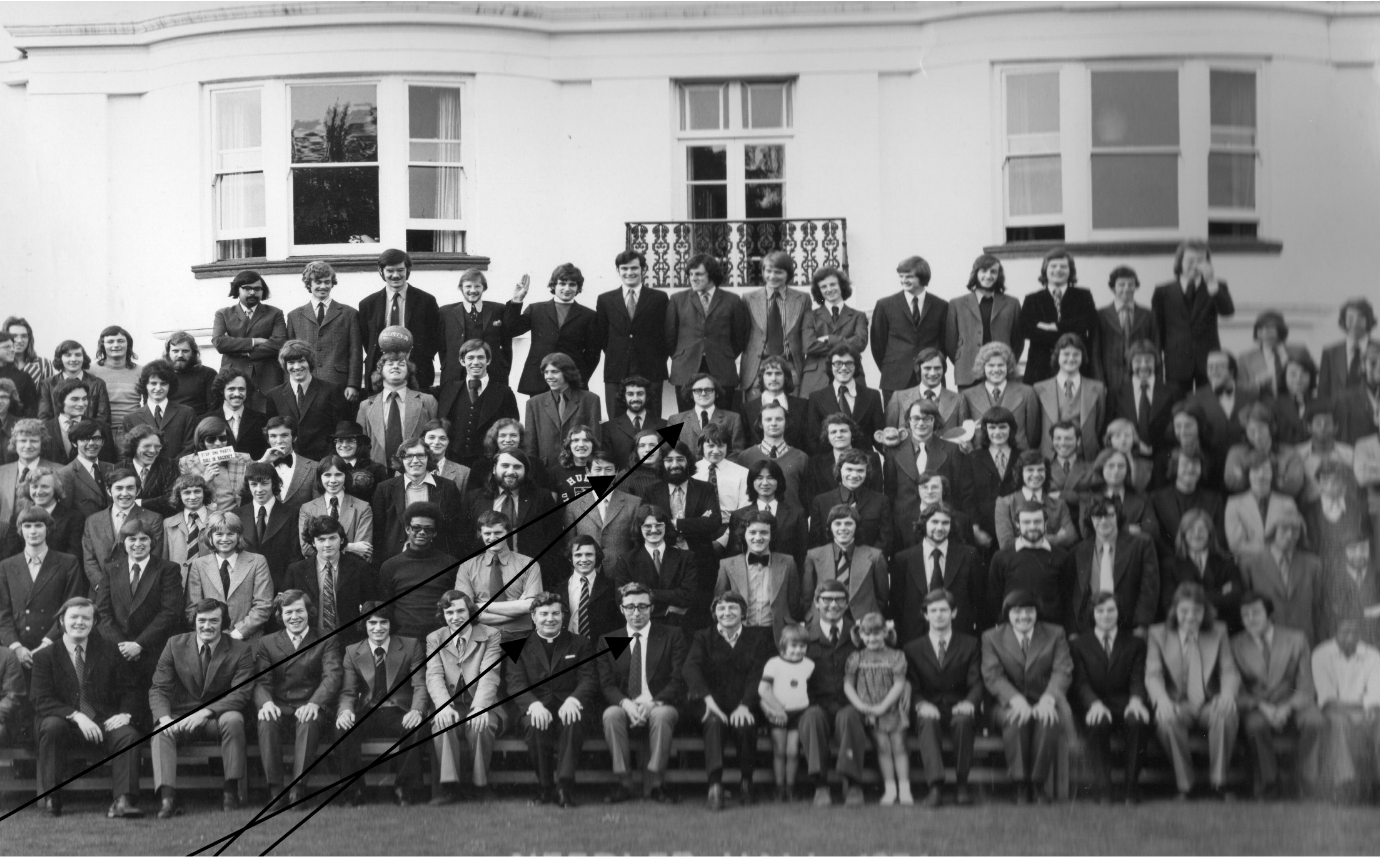
I was taken to Hull by our next-door neighbour called Nora, who was divorced but had two children, on Wednesday 26th September 1973. I was shown my room in the student accommodation at Needler Hall in Cottingham which is about two miles from the university campus. On Monday the first of October 1973 I went to the campus and formally registered for the Economics Course. After registration a man called David Cruckshank met me and showed me round the campus. The LSE had arranged this as he was a past student of the LSE & it was their policy to look after all of their students. In the Hull University’s prospectus there were three compulsory subjects and then the student had to choose another three subjects from the list of five optional subjects. I had decided that whilst I was good at maths and that maths was an optional subject, I did not think that I would be good enough to follow maths at degree level. I therefore mentally, eliminated maths from my choices. When I got to the table to register, the tutor explained that if I did not study Maths in the first year then it would be impossible to progress into the second and subsequent years study. I thought that this was very underhanded and should have been made clear in the prospectus, but the University had restructured the Economics course completely for that year & our intake of students were more likely to follow an econometrics rather than pure theory degree course. To give you a flavour of the kind of institution that the LSE was at that time I must put on record that when I arrived at the Hull, the LSE told me to contact a man by the name of Norman Briggs. They gave me his Hull address and telephone number. He had previously been to the LSE and it was the practice of past students to help the new arrivals from the LSE to settle in and show them round for the first year at their new university. I think that it is known as the “old boys’ network” but it certainly worked. Similarly, I was informed by the LSE the next year that there were two ex students going to arrive and which train they would be on so that I could meet them at Hull railway station and help them settle in. The system certainly worked whilst I was at Hull. When we were further involved in the first year it soon became obvious that a large number of students were unable to keep up with the maths as we were getting involved in calculus and much more complex maths than most had encountered before. I was lucky, I suppose, as I was not selected for the improvement classes that had been put on for those struggling students. I think that my training in mechanical engineering although had taken place many years previously had included many aspects of mathematics and somehow this helped me with the econometrics, calculus, & statistics that we students were expected to get to grips with in order to complete the second and third years of our studies. In my first year I soon realised that the university lecturers were not trained in dictation and the unfortunate student had to find any means possible to keep up with the lecturers when they were giving their seminars. Some were so bad that they actually stood directly in front of the blackboard whilst they were giving the lecture. This made it impossible to see what they were writing on the board and to make it worse when they got to the bottom of the board they started to wipe the top of the board clean so that they could put some more information down. I then decided that the only way that I could write comprehensive notes was to create my own system of shorthand.
In the whole three years study at Hull we students had to prove that we were proficient in twenty one completely different subjects in all. These varied from the following subjects:-
1. The Economic History of Britain & Japan 1800 to 1945
2. The English economic and social change1800 to 1900
3. Economics of the third world
4. Spatial economics
5. Applied Economics, (macro & micro)
6. Economics of Industry
7. Economics of monopolies & Mergers
8. Cost Benefit Analysis
9. The principles of economics
10. Labour Economics
11. Retail economics
12. Statistics
13. Probability
14. Calculus
15. Econometrics
16. Regional Economics
17. The Economics of the structure of industry
18. Banking
19. The psychology of retail economics
Not only did you have to attend lectures, (although some students did not attend) but it was compulsory to attend all seminars and each subject from the tutorials generated at least one essay per month. Therefore in the first year as we had six subjects to study that generated six essays per month and on average the tutor would expect the student to hand in the essay within four weeks. Clearly statistics and calculus were not the essay type but, problems that had to be solved, these usually took the form of case studies.
There was a time when I got my first essay back from my tutor in third world economics she was called Rowena Lawson and she had given me a mark of 90% for this essay. I took a look at the mark and immediately went to her secretary to ask if I could have an appointment to see her. I was asked why I would want to see her and I told the secretary that I was not happy with the mark Rowena had given me for my essay. The rest of the students in her class had heard me making the appointment and thought that I must have got a very poor mark, I was not about to make them any wiser. When I went in to see her a couple of days later she was ready for me and she did not give me any time to explain my position. She started by saying that she never adjusted any of the students marks in the past and she was not about to start now. She said that she believed that I had been given a very good mark for my first essay and I should be pleased. I explained that if this mark of 90% stood then over the next three years I would have to work very hard to improve this mark as the best I could achieve was 10% and that was highly unlikely for any student. She looked at me for a while and then she said in that case then what do you think would be a fair mark for this essay? I said I would be happy with a mark of around 60%, so she adjusted the mark to that and I left her office. I was playing the psychological game in that if I asked her to lower the mark then for the next three years she would always give me the benefit of the doubt. The bonus was when I left her office the other students asked me if she had adjusted my mark & what mark had I got. I told them that she had given me a new mark of 60% and I was very happy with that. They then assumed that I must have been given a very low mark in the first instance and thought that I was struggling.
On the evening of Saturday 1 June 1974, I was working on an essay in my room in Needler Hall when I heard a massive explosion and it was not clear to me where the explosion had occurred. It later turned out that the temporary bypass pipe (containing cyclohexane at 150°C (302°F) and 1 MPa (10 Bar)) ruptured, possibly as a result of a fire on a nearby 8 inch (20 cm) pipe which had been burning for nearly an hour at the chemical plant close to the village of Flixbrough. Within a minute, about 40 tonnes of the plant’s 400 tonne store of cyclohexane leaked from the pipe and formed a vapour cloud 100–200 metres (320-650 feet) in diameter. The cloud, on coming in contact with an ignition source (probably a furnace at a nearby hydrogen production plant) exploded, completely destroying the plant.
Around 1,800 buildings within a mile radius of the site were damaged. The fuel-air explosion was estimated to be equivalent to 15 tonnes of TNT (60 gigajoules) and it killed all 18 employees in the nearby control room. Nine other site workers were killed, and a delivery driver died of a heart attack in his cab. Observers’ opinions, have said that had the explosion occurred on a weekday, more than 500 plant employees would likely have been killed. The resulting fires raged in the area for over 10 days. At that time it was Britain’s biggest ever peacetime explosion.
Substantial destruction of property was recorded in Flixbrough itself, as well as in the neighbouring villages of Burton-upon-Stather and Amcotts. Significant structural damage affected Scunthorpe (eight miles away) and the blast was heard (and felt) twenty-five miles away in Grimsby. Although the area was quite remote, graphic images of the disaster were soon shown on television due to BBC and Yorkshire Television film crews who had been covering the Appleby-Frodingham Gala in Scunthorpe that afternoon.
The Consequences: The subsequent official inquiry into the accident determined that the bypass pipe had failed due to unforeseen lateral stresses in the pipe during a pressure surge. The bypass had been designed by engineers who were not experienced in high-pressure pipe work, no plans or calculations had been produced, the pipe was not pressure-tested, and was mounted on temporary scaffolding poles that allowed the pipe to twist under pressure. It should be noted that the by-pass pipe was a smaller diameter (20″) than the reactor flanges (24″) and in order to align the flanges, short sections of steel bellows were added at each end of the by-pass – under pressure such bellows tend to squirm or twist. These shortcomings led to a widespread public outcry over industrial plant safety, and significant tightening of the Governments Health & safety legislation in general and also the government’s regulations covering the Hazardous Industrial processes.
One tremendous outcome was that a government commission was set up which was chaired by Lord Robens the then Chairman of British Coal. The outcome of this enquiry was the passing of a ground breaking piece of Health & Safety legislation which was called “The Health & Safety at Work Act.” This piece of legislation did not lay down any new regulations or standards, but made it possible to bring in stronger regulations at the stroke of a pen rather than to have to go through the parliamentary machinery, which is very time consuming. To really emphasize the strength of this legislation the European Commission adopted this.
My student lodgings in Needler Hall: It can be seen from the photograph below that the old hall is a very traditional building and as the name suggests, it was the home of the owner & founder of Needler Chocolates & the factory was based in Hull. There is also a new wing to the accommodation which is located about where the photo was taken. Just behind the camera and this new accommodation is a two story building built in a “U” shape.
I always was looking for ways to take the “micky” out of the academics and I decided one day at the dining table that I would start a discussion on the fact that wherever there is a university there is also a prison and that could not be just a coincidence it must be a government policy based upon certain statistics about the correlation between crime and the student population. Well by the time we had finished our meal all of the students believed me and one of them went to his tutor to find out if he could write a paper on this phenomena. I just thought that it was so funny that anyone in their right mind could even think about taking the discussion seriously.
The Hall was run on Public School lines and the evening meal there was a top table where certain students were invited to sit with the warden of the Hall and other senior academics. We had to dress for the occasion and we had to present ourselves upstairs in the wardens flat where we were given drinks and shown our positions at the tables when we went down stairs. When it was my turn to be invited I was seated opposite the warden and in conversation he asked me what I had studied at the London School of Economics and where I had stayed whilst in London. When I had told him that I had stayed at Passfield Hall in Bedford square he was very interested and asked me if it was a single sex Hall in the same way that all the student accommodation was in Hull. I replied that it was a mixed hall and although the Hall was made up of Single, double, & triple bedrooms those rooms were occupied by one sex but everything else was on the lines of a mixed sex accommodation. He was amazed that the university would allow that as he had being trying to get Needler Hall into a mixed Hall on the lines of the new wing being for the females & the old wing are for the males. Not that it mattered because a lot of the students brought girls into their accommodation for one or two nights and nothing was really said about that practice.
I soon realised that if I brought students into the Hall for a meal early in the autumn term then the kitchen staff would think that they were living in the Hall. I then canvassed some lads who were in private accommodation who had to provide their own meals. I discussed with them the possibility of getting meals cheaper by coming to Needler for their evening meal & I would also bring them in during the weekend when the Hall provided full board. I would charge each of the for their meals and it was another way that I could earn a few bob that would get me some books that I required for my course, this would also enable me to send more money home to Margaret & the family.
To generate further income to help my family at home I bought bicycles from students who were leaving university and stored them in Needler Hall of residence where the porter looked after them for me. I subsequently “rented them out to new students on a daily rate. When I left after my graduation I sold the business to one of the second year students for a nominal amount. I used to sleep with my room door unlocked and one night I was woken by one of the student who was stood in the doorway shouting “I am confused where am I?” He had been to “Durty Kelly’s” Pub in the old town of Hull for some drinks and it was one of those pubs where they literally had sawdust on the floor and the regulars were to say the least a little bit shady. The Pub was very close to Hull Prison.
Whilst he was drinking there someone had slipped something into his drink and then put him into a taxi. I got on well with the Deputy Warden of the Hall a man by the name of Ned Whitfield he was a senior lecturer in Russian Studies at the University. He loved to play the bagpipes that would drive the rest of us crazy. He appeared to be very straight laced but he had a terrific sense of humour, for instance he wrote an academic paper that was accepted by the Chancellor of the University. This paper was a spoof and, when he published this paper he convinced the University authorities that this was proof that the bagpipes were first invented in Russia.
There was one Friday night when I learned that one of the third-year students was going to take his girl out & bring her back to Needler to stay the night. As usual I had a master key to all of the rooms & I thought that it would be funny if I took the door off its hinges & then closed the door again and locked it. I always made sure that I had an alibi for my pranks so I suggested to Ned that William & I would go up to his flat and listen to his classical collection of records. So when the student came in and opened his door, the door fell off its hinges. Well there was an almighty bang as the door fell onto the floor, and we all went down to investigate, by now the girl had decided that she would not stop the night & the student did not know how to put the door back on its hinges. Ned arranged for the university joiners to come on the Saturday morning and replace the door. There were only six screws to put back and I could have done it in about half an hour, but they sent two men & these men made the job last all of the morning & the student got charged for the work.
Most people knew that I was probably behind most of these pranks but nothing could ever be proven. Another time one of the very rich students whose father at that time was on the board of directors of TESCO brought his girlfriend down to the university and took her out for a meal at a top restaurant in Beverly. John knew that I was behind all of the pranks but did not tell anyone. When he took his girl out for a meal in Beverly I waited until he had time to get there and be seated in the restaurant and then I telephoned the hotel and asked them to pass a message to him. I gave my real name and said tell John that tonight’s the night. When he got the message and knowing that it had come from me he immediately got up from the table and brought his girlfriend back to Needler Hall. He made sure that he found me and asked me what I had done. I said that I had done nothing and the message was to indicate that he was going to have great night with his girl when he got her back to his lodgings. His girl was not too pleased to have her night in the hotel ruined and she refused to sleep with him. Nothing to do with me of course, I think that this was just him misunderstanding the message that I had sent to him.
There was another time when I thought that it would be funny if I let it be known that I was going to play a practical joke on one of the students and I made sure that that particular student knew about the event beforehand. The night before I planned to play the joke on the lad I told him in front of his friends that the next day he was going to get a practical joke played on him and there was nothing that he could do about it. So he said that I had made a mistake in telling him about that prank because now he was not going to leave my side and the next day he was going to follow me to every place that I went and even attend my lectures and sit outside of the rooms when I attended my seminars. I said that was fine I would make sure that he was with me all of the time and I would meet him after breakfast to go to the university. We had all of our meals together and in the evening we went to the pub round the corner and after that we went to my room for coffee. He then said well I have been with you all day and you have not done anything so I think that you have lost your bet and I am going to bed now. I said OK but if you can still say at breakfast tomorrow that I have failed then I will concede that I have failed and pay you my bet.
What I had done was watch him go for his breakfast and then I entered his room and put itching powder into his pajamas, then I went to breakfast knowing that he would not touch his clothes until he went to bed and therefore he could follow me around as much as he liked as the prank had already been carried out. Remember, Planning, that’s the secret of a good prank.
On the evening of Monday the 9th June 1975 three of us were walking through Cottingham passed the chemists towards our lodgings at Needler hall. We had gone passed the chemists and were had turned to walk towards Needler Hall when we heard the sound of breaking glass from behind us. When we went back we noticed that the chemists shop window had been broken and there was a man who looked to be in his fifty’s staggering from the shop with his arms full of items that had obviously been stolen from the chemists. I told one of the lads to run to the telephone box & phone for the police, I told the other lad to go back to the chemists and make sure that no one else entered that shop until the police arrived. For my part I would follow the guy and make sure that he did not get away with his “booty”. It was rather a comical sight as he walked his trousers kept falling down round his ankles and he had to stop to pull them up, so he did not make very much headway. Eventually the police came and arrested the man & also took statements from the three of us. We thought that we had heard the last of it. Then a letter arrived at my home at 13 Hastings Way Billingham from the Chief Superintendent of Humberside Police commending me for my actions on that night.
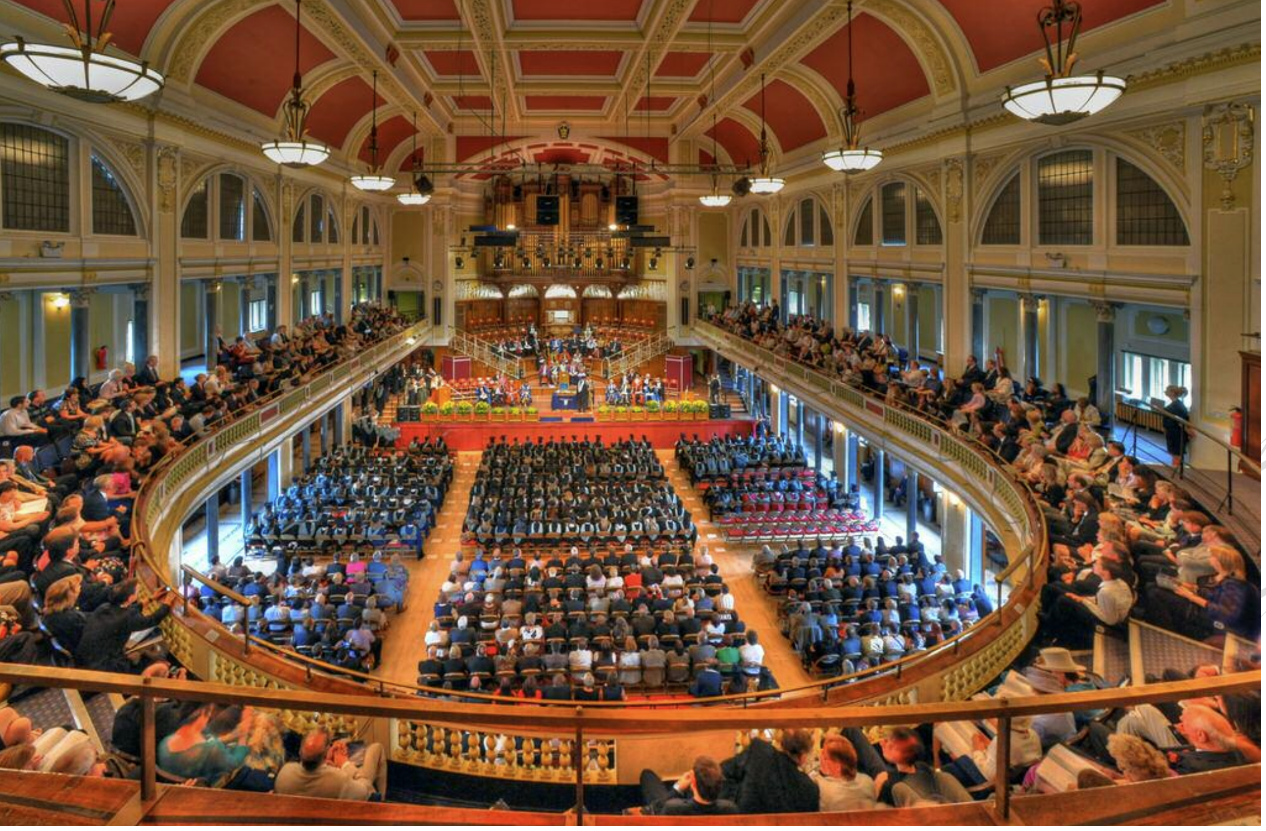
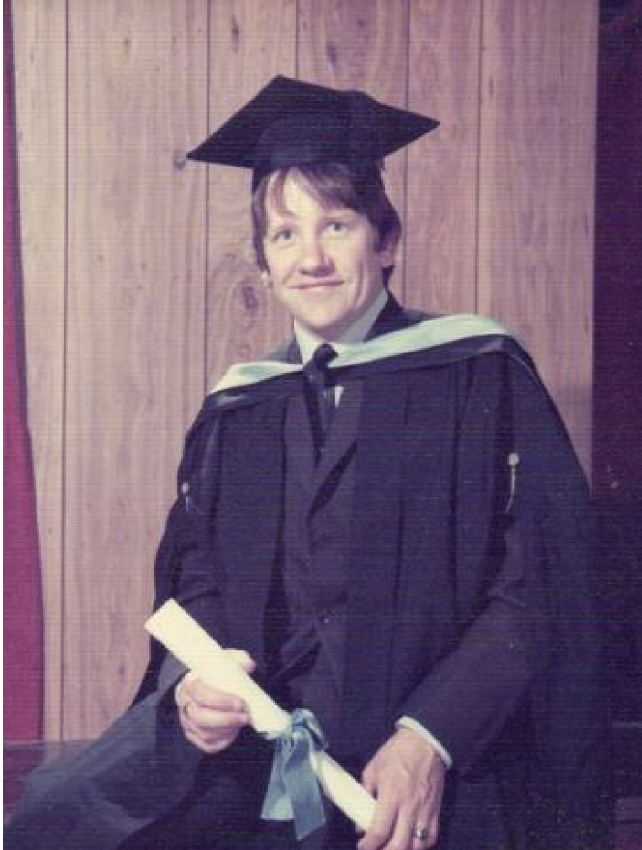
I was told by my professor Ben Roberts at the London school of Economics that Hull University was a very good university but it had a very high throw out rate for students during their three years of study therefore it was no surprise that when I graduated there were only forty students who were awarded a degree in economics and of these, only thirty were awarded an honours degree. There were two hundred and twenty students in the first year of the three year course, and only ninety passed their first year exams into the second year, so all in all I was very pleased that I gained an honours degree although one can always want to do better. Not bad for the son of a loco driver and whose mother was brought up in a workhouse & who left school without any qualifications to his name!
 University of Hull Alumni Association
resplendent! Just In: Developments in [Ongoing Legal Battle] 2025 fetching
LikeLike
We must missed each other by a year. I started and lived at Needler in September 1976 Special Chemistry.
LikeLike
I was also at Needler Hall 1973 to 1976, studying Biochemistry, and am in the group photo
LikeLike