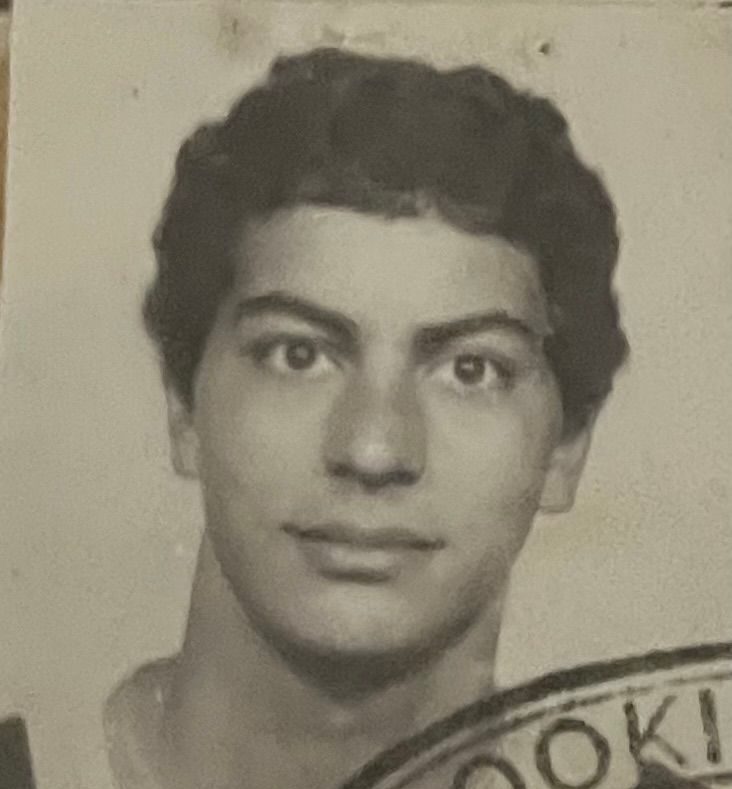
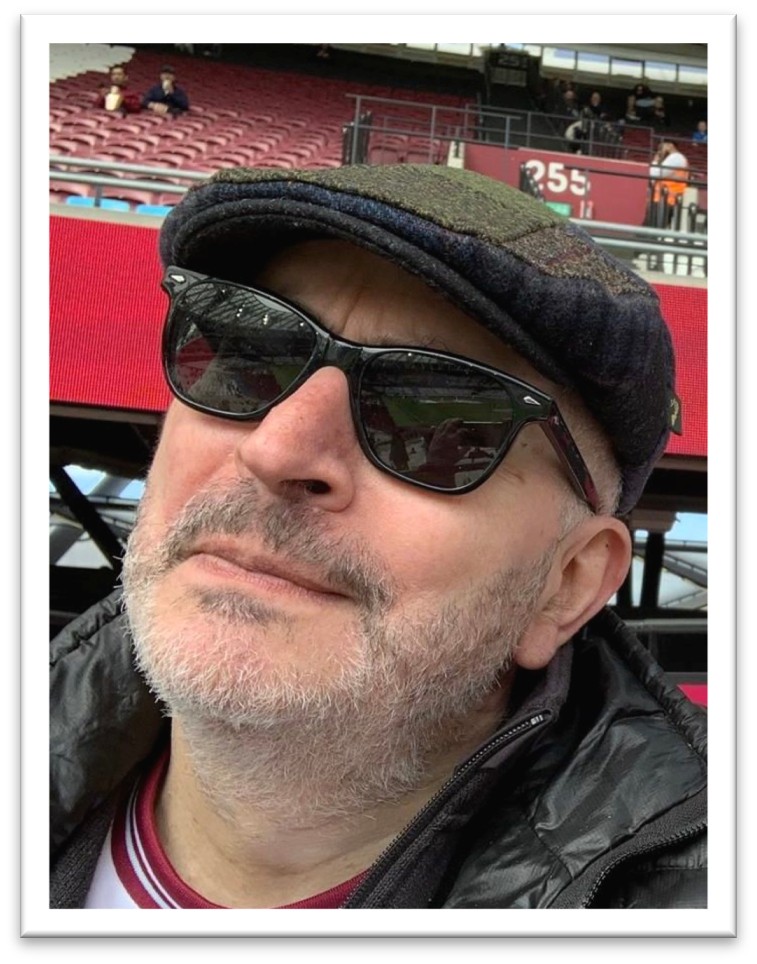
“The three tribes that defined my time at Hull” – David Sarley on football, music, politics and his time at Hull
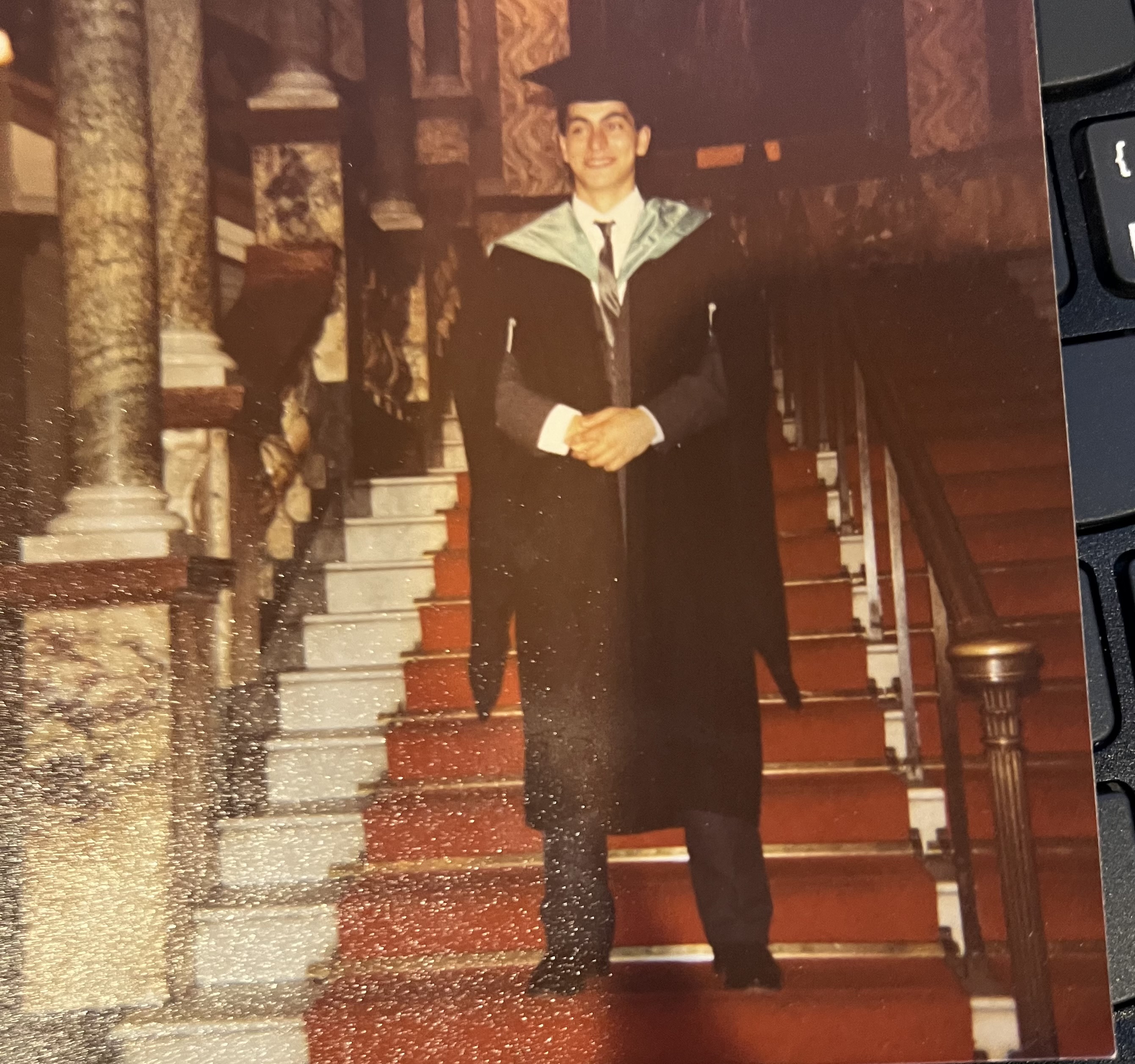
“I spent most of the first 18 years of my life living in East London and had not looked further than the Midlands for my other university applications. But somehow the UCCA gods worked their magic. A disadvantaged, dyslexic, working-class, mixed-race boy from a single parent household secured the right place. Hull University was an encouraging and enabling environment, providing the opportunity for an education.”
David Sarley (BSc Economics, 1982)
How well do we really know each other at 18?
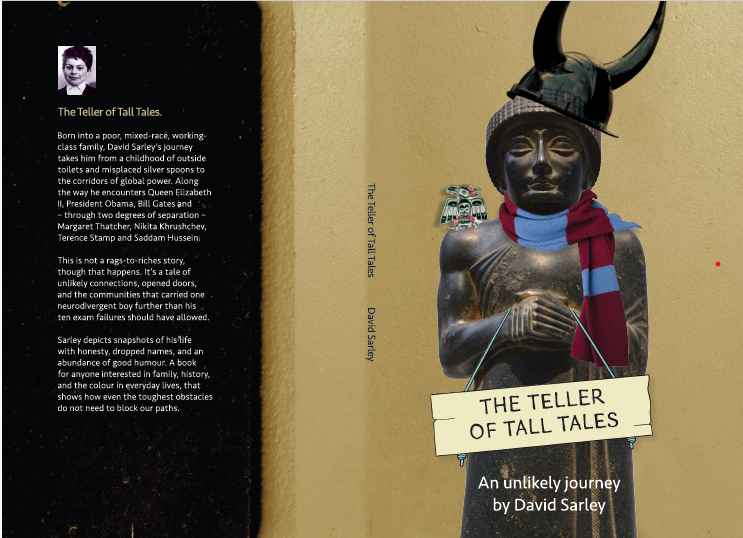
While writing his recently published memoir, The Teller of Tall Tales, University of Hull graduate David Sarley (BSc Economics, 1982) found himself revisiting a period of his life that many of his fellow students only saw in part.
His story begins in a poor, mixed-race, working-class household in East London, but would eventually take him across more than 80 countries and into encounters with figures including Queen Elizabeth II, President Obama and Bill Gates. Along the way, there were family connections stretching back to the Ottoman Empire, economic consulting in post-Soviet Russia, and twelve years managing a global health portfolio at the Gates Foundation.
Yet, as David reflects in his memoir, many of the friendships, opportunities and communities that helped shape that journey were first found during his time at Hull.
Sharing memories with fellow members of the Class of 1982 prompted him to look back on the experiences, friendships and challenges that made those years so formative.
“Certainly there was very little I would have told others at 18 that I am happy to discuss now,” David explains. “I think that is the strength of writing memoir, that we can reveal ourselves in a way we couldn’t have in our younger days.”
When David arrived in Hull in 1979, he had not expected to be there at all.
Having grown up in East London, Hull was farther north than any of the other universities he had applied to. Yet that move would ultimately broaden his horizons immeasurably.
In this piece, inspired by the memories of Hull that returned to him during the writing of his memoir, David reflects on three important influences from his time as a student with us that helped to shape him.
Arriving at university without knowing anyone, the football club offered an instant sense of belonging.
“The first, and perhaps most important tribe, was the football club. I did well at the football trials and was able to play for three years, mostly for the second team. Arriving not knowing anyone, the football club gave me 36 instant mates. Saturdays and Wednesday afternoons were spent either playing at home or travelling to away games all over the country. We also trained several times a week with many additional hours spent drinking together including on one unforgettable tour to Belgium. You’ll need to buy the book to read the grim details about that one!”
Tribe Two: Music and the Ents Scene
A very different group of friends emerged through Hull’s vibrant music scene.
“The second tribe was an unlikely amalgam of music-focused friends. Between 1979 and 1982, the music scene was shaped by the tail end of punk, the ska era, and the start of new wave. These friends were, by and large, from a different world than my football mates although there was some overlap. Many were English, Arts, and theatre students who shared an interest in live music.
“Although we were on a budget, one way to enjoy the music on offer both on and off campus was to volunteer for the entertainments committee, or Ents. That meant working in various volunteer roles – front of house, promoting music events, or supporting the stage managers – in return for free tickets to the bands that included Hull on their tours.
“We saw Madness, Dexys Midnight Runners, Bad Manners, Chrissie Hynde and the Pretenders, UB40, and the Rezillos, among others that left a strong impression. My very first event at the Students’ Union, during Freshers’ Week, was unfortunately headlined by Chas and Dave. It was both a huge disappointment and a worrying sign of what student music might have in store. Fortunately, new Ents leadership helped improve the quality.”
Tribe Three: Student Politics – “A working-class Labour-leaning Athletic Union representative was something of a novelty”
David’s third community was found in student politics.
“My third community was the Broad Left political group, which was active on the Student Council. I came to that group through the football club and the Athletic Union. I was elected as Athletic Union treasurer. That role came with a seat on the Student Council.
“Typically, the Athletic Union representative was a right-leaning Tory rugby player, so having a working-class Labour-leaning Athletic Union representative was something of a novelty.”
Life Beyond Campus – “Degrade Street”
Student accommodation provided some of David’s most vivid memories.
“The Lawns, set in immaculate grounds, was a gentle introduction to living away from home. In second year, however, we had to find private accommodation. Whether because of our budget, our timing, or the unappealing prospect of six lads house-hunting together, we struggled. Eventually we found a large three-storey terrace in De Grey Street: no bathroom, no central heating, and an outside toilet. The mile-long walk to campus at least helped warm me up.
“De Grey Street sat off Newland Avenue, among large Victorian terraces that hinted at Hull’s more prosperous past. Economic decline and landlord neglect had left our house in poor condition, and it became so much worse after we lived there that the rent was reduced the following year. For obvious reasons, it became known as Degrade Street.
“Most rooms had fireplaces, and a couple of my housemates could afford fuel. One, the son of a miner, kept a sack of smokeless coal under his bed, sleeping soundly above it like Smaug guarding treasure. Those with heat kept their doors shut. I had drawn the short straw and got the smallest room, a former scullery maid’s pad halfway up the stairs, with space only for a bed, no heating, and the kitchen directly beneath.
“I decorated it myself, badly. Ice formed inside the window when temperatures dropped below zero. With no bathroom, I showered at the sports centre, broke fast in the Students’ Union, and stayed late in the library because my room had neither desk nor heat.
“I spent as much time as possible at my girlfriend’s far superior shared house. She may have been the first to call ours Degrade Street and showed little enthusiasm for visiting.”
Looking Back
More than four decades after graduation, David still sees Hull as the place that helped shape the course of his life.
“I now recognise the years in Hull were pivotal in my life. That journey by train from London helped expand my horizons and eventually led me to live and work in the Caribbean, the USA and over 80 other countries.
“Hull University was an encouraging and enabling environment. It provided the opportunity for an education. It also had the bonus of awarding degrees.”